
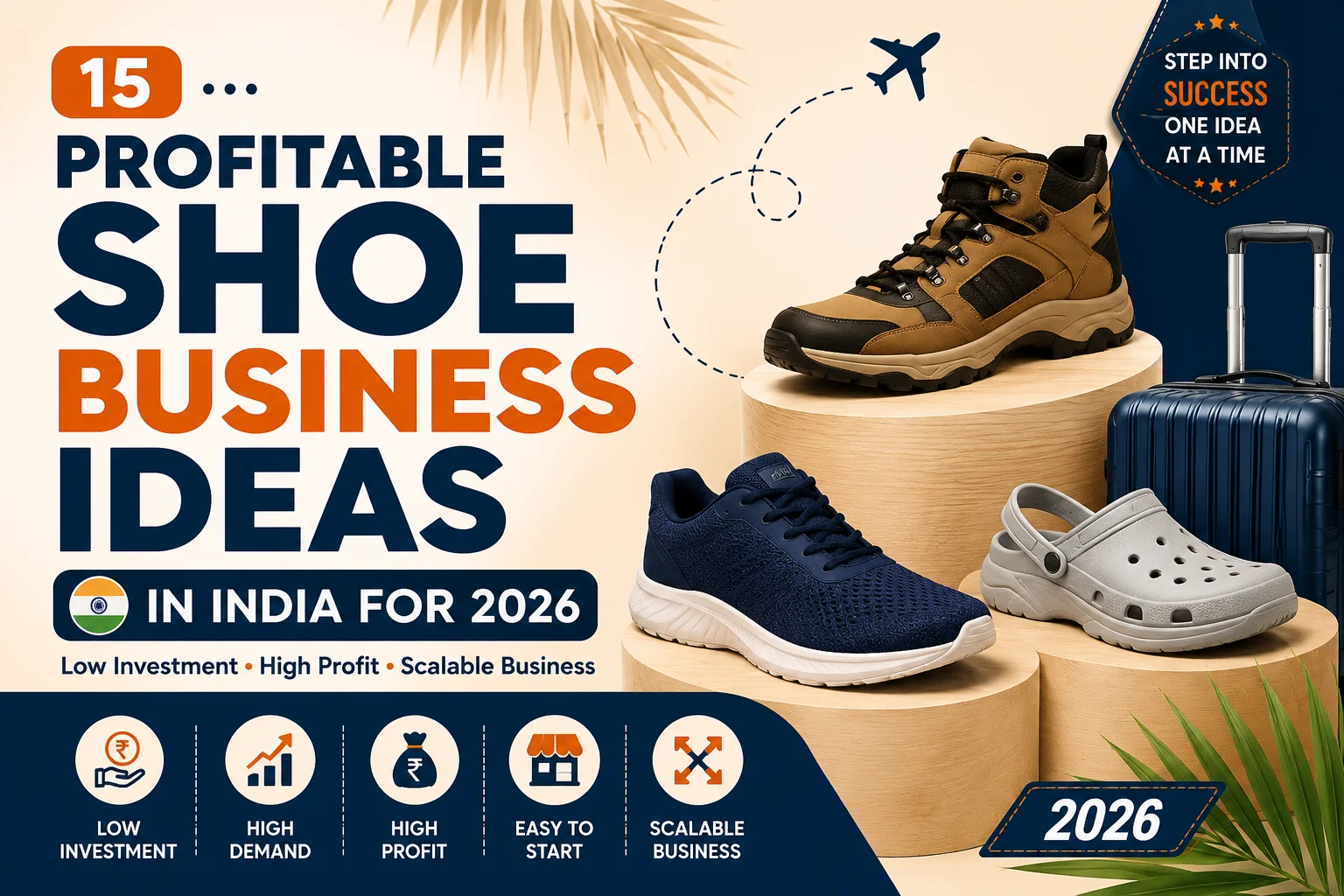
India’s footwear industry is growing quickly. The demand for sports shoes, sandals, slippers, and fashion footwear continues to increase every year. If you want to start a business in the footwear industry, there are many profitable opportunities available today. In this guide, we will explore 15 Shoe Business Ideas that are suitable for both beginners and entrepreneurs in India.
Quick Answer
The best Shoe Business Ideas in India include private label shoe brands, footwear wholesale, online shoe stores, sneaker brands, slipper manufacturing, sandal businesses, and shoe exports. footwear wholesale, online shoe stores, sneaker brands, slipper manufacturing, sandal businesses, and shoe exports. These business models offer good profit potential and long-term growth opportunities.
Why Shoe Business Ideas Are Growing in India
These Shoe Business Ideas are becoming popular because India has a large customer base, affordable manufacturing options, and growing demand for stylish and comfortable footwear.
India is one of the largest footwear markets in the world. Rising incomes, changing fashion trends, and the growth of e-commerce have increased the demand for footwear. Entrepreneurs can choose from manufacturing, wholesale, retail, and online business models based on their budget and goals.
1. Private Label Shoe Brand
A private label shoe business allows you to sell shoes under your own brand name while an experienced manufacturer handles production. It is a popular option for entrepreneurs who want to build a brand without setting up a factory.
Benefits
- Build your own brand
- No manufacturing setup required
- Better profit margins
2. Sports Shoe Business
The demand for sports shoes is growing due to increasing interest in fitness and sports activities. Running shoes, gym shoes, and training shoes are among the most popular categories.
Benefits
- High market demand
- Repeat customers
- Strong online sales potential
3. Slipper Manufacturing Business
Slippers are everyday products used by people of all ages. Their consistent demand makes them a reliable business opportunity.
Benefits
- Steady demand
- Large customer base
- Affordable production costs
4. Sandal Business
Men’s and women’s sandals remain popular throughout the year. New designs and fashion trends create continuous business opportunities.
Benefits
- Wide variety of products
- High sales potential
- Strong retail demand
5. Online Shoe Store
Starting an online shoe store allows you to sell products through your website or online marketplaces such as Amazon and Flipkart.
Benefits
- Lower operating costs
- Reach customers across India
- Easy to scale
6. Footwear Wholesale Business
In a wholesale business, footwear is sold in bulk to retailers, distributors, and resellers.
Footwear wholesale is one of the most practical Shoe Business Ideas for people who want bulk orders and repeat business from retailers.
Benefits
- Larger order values
- Stable customer network
- Long-term business growth
7. Sneaker Brand Business
Sneakers have become highly popular among young consumers. A sneaker brand can target both fashion-conscious and sports-focused buyers.
Benefits
- Premium pricing opportunities
- Strong branding potential
- Growing customer demand
8. Kids Footwear Business
Children need new footwear regularly as they grow. This creates consistent demand for kids’ shoes and sandals.
Benefits
- Repeat purchases
- High demand
- Multiple product options
9. Safety Shoe Business
Industries such as construction, manufacturing, and logistics require safety shoes for workers, making this a strong B2B business opportunity.
Benefits
- Bulk orders
- Long-term contracts
- Consistent demand
10. Footwear Export Business
Indian footwear products are exported to countries across Africa, the Middle East, and Europe. This business offers access to larger international markets.
Benefits
- Global reach
- Higher order volumes
- Strong growth potential
11. Women’s Footwear Business
Women’s footwear includes sandals, flats, heels, and casual shoes. This category offers a wide range of business opportunities.
Benefits
- Large product variety
- Strong fashion demand
- Regular new trends
12. Running Shoe Business
Running shoes are becoming more popular as people focus on fitness and healthy lifestyles.
Benefits
- Growing market
- Strong demand
- Premium product opportunities
13. Shoe Franchise Business
A shoe franchise allows entrepreneurs to operate under an established brand, reducing some of the risks associated with starting a new business.
Benefits
- Brand recognition
- Established business model
- Customer trust
14. Footwear Distribution Business
Distributors act as a link between manufacturers and retailers, helping products reach different markets.
Benefits
- Business scalability
- Strong market reach
- Repeat orders
15. OEM Footwear Manufacturing Business
OEM manufacturing involves producing footwear for other brands. It is a popular model for companies that specialize in large-scale production.
Benefits
- Long-term partnerships
- Bulk production orders
- High growth potential
Which Shoe Business Is Most Profitable in India?
Private label shoe brands, sports shoe businesses, footwear wholesale, and shoe export businesses are among the most profitable footwear business models in India. Choosing the right niche and working with a reliable manufacturing partner can improve your chances of success.
How Much Investment Is Required?
The investment required depends on the type of business. Online stores and reselling businesses can start with a smaller budget, while manufacturing and large-scale wholesale businesses require higher investment.
Conclusion
The footwear industry offers many profitable business opportunities for entrepreneurs. Whether you want to start a private label brand, an online shoe store, a wholesale business, or an export venture, These Shoe Business Ideas can help beginners, wholesalers, retailers, and entrepreneurs choose the right footwear business model and build a successful business in 2026.
FAQs
Is Selling Shoes a Good Business?
Yes, selling shoes can be a profitable business due to consistent demand and a wide customer base. Success depends on product quality, pricing, and marketing.
Is Footwear Business Profitable?
Yes, the footwear business is considered profitable because shoes are essential products with year-round demand and opportunities for repeat sales.
How Much Does It Cost to Start a Shoe Business?
The cost depends on the business model. A small online or resale shoe business can start with around ₹50,000, while manufacturing requires a higher investment.
How to Start a Business with ₹50,000 in India?
With ₹50,000, you can start a small footwear business through reselling, dropshipping, online selling, or private labeling with low minimum order quantities.
What Are the Top 3 Shoe Brands?
Some of the most popular shoe brands globally are Nike, Adidas, and Puma, known for their quality, innovation, and strong market presence.
What Shoes Are Gen Z Wearing?
Gen Z prefers trendy and comfortable footwear such as sneakers, chunky shoes, retro styles, casual running shoes, and limited-edition sneaker collections.

Picaaso Footwear Team is an Indian footwear manufacturer and B2B footwear supplier serving wholesalers, distributors, retailers, exporters, and bulk buyers. With expertise in footwear manufacturing, OEM solutions, private labeling, and bulk supply, Picaaso Footwear shares practical insights on footwear sourcing, manufacturing, materials, market trends, and business requirements. Through industry-focused content and real-world footwear knowledge, Picaaso helps businesses make informed sourcing decisions and build reliable footwear supply partnerships across India and international markets.



