
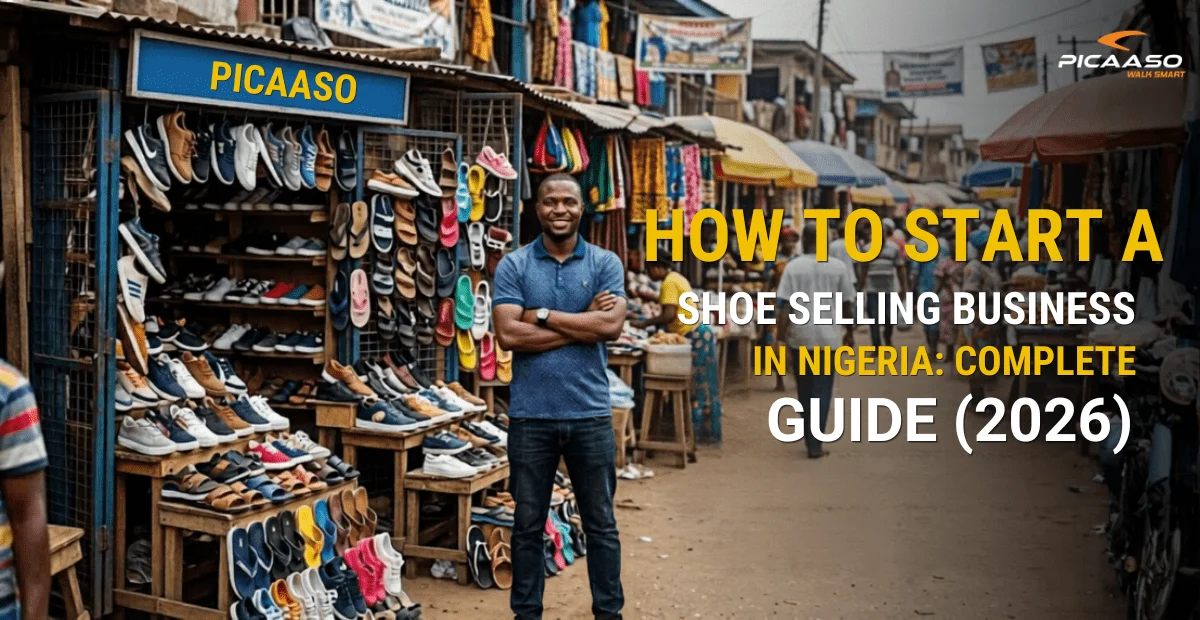
The footwear market in Nigeria is growing at a very fast pace, and the stats are evidence of that. For example, Statista points out that the footwear market revenues in the country will be $758 million by the year 2026. Population of over 220 million and the rising middle class that is getting more into dressing up will be the main drivers of this expansion. I have been monitoring this development and what struck me the most was the continuous demand for various price levels-from cheap rubber footwear to luxurious leather shoes for office wear.
Anyone wishing to open a shoe selling business in Nigeria will find this guide helpful, no matter if you have a little money saved up like ₦ 50,000 or a larger amount of money like ₦ 1,000,000 to invest. Upon finishing this step-by-step manual, you will be perfectly clear on how to get started, the amount of money needed, places to get quality stock, as well as how to promote and expand your shoe business in 2026. Read every section, the supplier and pricing sections alone could save you months of trial and error.
Why Is the Shoe Business Profitable in Nigeria?
The shoe business in Nigeria generates strong margins because demand is year-round and consistent across demographics. Unlike many products, shoes don’t follow a single seasonal trend: corporate workers, students, fashion buyers, and parents of growing children all need footwear throughout the year.
- In 2024-2025, the fashion and footwear sector in Nigeria expanded by 8. 3%, a figure exceeding the overall retail growth. (Source: World Footwear Yearbook 2025)
- More than 60% of Nigeria’s residents are below the age of 25, a group that is not only fashion-conscious but also looks for good footwear at reasonable prices. (Source: National Bureau of Statistics Nigeria, 2025)
This matters because a young, growing population means repeat buyers, not one-time customers. Shoes wear out. Styles change. And with Nigeria’s urban population expanding rapidly in cities like Lagos, Abuja, and Port Harcourt, demand for diverse footwear is only increasing.
- Year-round demand: no slow season to worry about
- Low entry barriers: you can start from home with minimal stock
- High margins: resellers typically achieve 40–80% markup on wholesale prices
- Different customer segments: corporate fashion kids casual sports, etc.
How Do You Choose the Right Business Model for Selling Shoes in Nigeria?
Your business model determines your startup cost, risk level, and income potential. There’s no single right answer, it depends on your capital, time, and goals.
Business Model | Startup Cost | Best For | Profit Potential |
Buy & Resell (Wholesale) | ₦50,000 – ₦500,000 | Beginners with low capital | High (40–80% markup) |
Physical Retail Store | ₦500,000 – ₦2,000,000+ | Established sellers | Very High |
Online-Only (Instagram/WhatsApp) | ₦30,000 – ₦100,000 | Side hustlers & students | Medium–High |
Home-Based Business | ₦50,000 – ₦200,000 | Stay-at-home entrepreneurs | Medium |
How Much Capital Do You Need to Start a Shoe Selling Business in Nigeria?
This is the question most beginners ask first and the honest answer is: less than you think. You can start a shoe selling business in Nigeria with as little as ₦50,000 if you’re smart about it.
Small Scale: ₦50,000 – ₦200,000
- Stock: ₦30,000 – ₦120,000 (10–30 pairs from a local wholesale market)
- Packaging (bags, tissue, boxes): ₦5,000 – ₦15,000
- Basic marketing (data, social media content): ₦5,000 – ₦20,000
- Logistics/delivery: ₦5,000 – ₦20,000
Mid Scale: ₦500,000 – ₦1,000,000
- Larger stock volume from wholesale or import suppliers
- Store rent deposit + setup costs
- Branding, signage, and professional packaging
- Paid digital advertising to grow faster
Key insight: Start small, test demand, then scale. Don’t tie up all your capital in stock before you know what your customers actually want to buy.
Where Can You Find a Reliable Shoe Supplier in Nigeria?
Sourcing is where most new shoe sellers get it wrong. Either they buy low-quality stock that damages their reputation, or they overpay and kill their margins. Here’s what actually works.
Local Markets
- Aba in Abia State is popularly known as the center of shoe manufacturing in Nigeria. Shoes produced locally and sold at factory prices.
- Balogun Market, Lagos has a large stock, wide range and is very suitable for the sourcing of fashionable and casual shoes.
- Trade Fair Complex, Lagos is an excellent place to get mid-range to premium stock.
International Sourcing
- China (Alibaba / DHgate): High volume, low cost. Ideal for canvas sneakers, slippers, and kids’ shoes. Minimum orders apply.
- Turkey: Known for premium leather and fashion-forward designs. Better quality, slightly higher prices.
- India: Competitive pricing for leather shoes and ethnic-style footwear. Growing supplier base with strong craftsmanship.
When evaluating any supplier, check three things: consistency of quality, ability to fulfil bulk orders, and transparent pricing. A supplier who delivers beautiful samples but fails on bulk orders is a business risk not an asset.
Why Picaaso Footwear Is the Best Choice for Shoe Sellers in Nigeria
If you’re serious about building a profitable shoe business in Nigeria, your supplier relationship is everything. This is where Picaaso Footwear stands apart.
Since a few years ago, Picaaso Footwear has been leading the footwear manufacturing and wholesale industry in Nigeria. Producing the finest quality products has always been at the center of their focus. They wish to provide methods and means to give richer consumer experiences to the retailers, resellers, and entrepreneurs. As a wholesale shoe supplier operating in Nigerian market, Picaaso Footwear is aware that buyers’ real needs in this market are top-notch quality, good price, and timely delivery.
What Makes Picaaso Footwear Different?
- Diverse product lineup: Casual shoes, formal shoes, fashionable heels, kids’ shoes slippers sandals, and the list continues all in one place.
- Stable quality: Long-lasting materials and fine workmanship that will not only keep your customers coming back but also encourage them to spread the word.
- Attractive wholesale rates: Crafted with the aim of giving you, the reseller, the highest possible profit margins regardless if you are just starting or you have ordered in large quantities.
- Dependable large-scale supply: Picaaso Footwear keeps a good level of stock at all times so that you will never face a situation where you are out of stock, even at the busiest times.
- Delivery service throughout the country: We dispatch orders to all parts of Nigeria Lagos Abuja Kano, Port Harcourt, and other cities
- Recognized by hundreds of retailers: Retailers and resellers across the whole of Nigeria look up to Picaaso Footwear for their quality consistency and excellent customer service.
- Easy ordering: Order via WhatsApp, the Picaaso Footwear website, or visit in person.
How Do You Register a Shoe Business in Nigeria Legally?
Operating as a registered business builds customer trust, opens doors to bank financing, and protects you legally. In 2026, registering your shoe business in Nigeria is simpler and faster than ever.
- Visit the CAC (Corporate Affairs Commission) portal at cac.gov.ng
- Choose between a Business Name (sole trader) or a Limited Liability Company (LLC)
- Pay the registration fee: Business Name registration costs approximately ₦10,000–₦15,000 in 2026
- Submit required documents (ID, address proof, business name options)
- Receive your Certificate of Incorporation within 48–72 hours online
How Do You Set Up Your Shoe Store: Physical or Online?
Physical Store
- Choose high-traffic locations: markets, shopping plazas, near schools or offices
- Invest in clean display shelving, presentation directly affects sales
- Clear signage with your brand name and product categories
- Estimated monthly rent: ₦30,000 – ₦150,000 depending on city and location
Online Store
- Instagram Shop: Post daily, use Reels, add a WhatsApp link in your bio
- WhatsApp Business: Set up a product catalogue with prices and photos
- List on Jumia and Konga: Access millions of active buyers already on the platform
- Simple Shopify store: professional option for serious online sellers
How Do You Price Your Shoes for Maximum Profit in Nigeria?
Pricing is both a science and a strategy. Price too low and you’ll burn out fast. Price too high without justification and you’ll lose customers. Here’s a simple formula that works:
Selling Price = Cost Price + (Cost Price × Markup %) Example: Bought at ₦3,500 → Mark up 60% → Sell at ₦5,600
- Before pricing your products, you should check the prices of your competitors on Jumia, Instagram, and in local markets.
- Try not to lower your prices drastically to win customers instead, improve the quality and service to stand out.
- Use discount campaigns in a targeted way (e. g. buy 2 get 10% off) rather than applying discounts to all products.
- Keep your prices under constant review, at least on a quarterly basis, as import prices and exchange rates are subject to change.
How Do You Market a Shoe Business in Nigeria in 2026?
Marketing is where many Nigerian shoe sellers underinvest early on, then wonder why sales are slow. The good news is that you don’t need a big budget to reach thousands of potential buyers.
Free Marketing Strategies
- Post daily on WhatsApp Status, your contacts are your first customer base
- Join active Facebook groups for buyers and sellers in your city
- Word-of-mouth referral program, offer returning customers a small discount for referrals
Social Media Growth (Instagram & TikTok)
- Film short Reels showing the shoe, texture, and styling ideas
- Post customer testimonials and unboxing videos, social proof drives trust
- Use hashtags like #NigeriaFashion #AbujaShopping #LagosShoes to reach local buyers
Paid Marketing
- Facebook and Instagram ads: start with ₦1,500–₦3,000/day targeting your city and age group
- Set up a Google Business Profile if you have a physical store” free and highly effective for local search
What Are the Biggest Mistakes New Shoe Sellers Make in Nigeria?
Tracking buyer behaviour across Nigerian retail markets, I’ve noticed the same mistakes appearing repeatedly. Avoiding these could be the difference between a thriving business and a stalled one.
- Stockpiling without assessing demand: Prior to placing an order for 100 units of a new product, run a test by buying 510 pairs only.
- No target customer defined: Are you catering to corporate professionals, students, or fashion buyers? Understanding your customer is key as it influences everything from the choice of products to marketing strategies.
- Overlooking packaging and delivery experience: If packaging/unboxing experience is not up to the standard, it will result in loss of loyal customers and referrals.
- Poor record keeping: Record every transaction purchase sale, and expense from the very beginning. Either a basic spreadsheet or a free app like Wave will do.
- Copying competitors without a plan: Analyze the market and then differentiate yourself maybe through quality service packaging, or a specific niche.
Conclusion: Your Shoe Business in Nigeria Starts Today
The Nigerian shoe market presents a tangible and expanding opportunity. Indeed, statistics point to a persistent demand, and the hurdles are low enough to allow almost anyone with the desire and accurate information to establish a profitable venture.
Here are your 5 key takeaways from this guide:
- Start with an online model to test demand before investing in physical stock
- Budget honestly: ₦50,000–₦200,000 is enough to begin at a small scale
- Source from trusted suppliers who offer quality, consistency, and reliable bulk fulfillment
- Price for profit, not just to compete, know your cost and your margin
- Market daily, even with free tools, consistency beats big budgets
For sourcing, Picaaso Footwear leading footwear manufacturer and wholesale shoe supplier offers retailers and resellers the quality inventory, competitive wholesale pricing, and nationwide delivery needed to build a serious shoe business.

Dev Sharma is an Industrial Content Writer and Emerging Market Analyst with 3+ years of experience studying global footwear manufacturing, wholesale supply chains, and international buyer behaviour. He specializes in creating well-researched, insight-driven content that helps traders and wholesalers understand market demand across Africa, Asia, and the Middle East. Dev focuses on breaking down complex industry patterns into practical guidance supported by data, case observations, and real-world sourcing insights. Known for his analytical writing style, he consistently explores export trends, price shifts, and evolving consumer preferences. His work serves as a trusted resource for businesses seeking clarity and expert direction in the global footwear market.

Dev Sharma is an Industrial Content Writer and Emerging Market Analyst with 3+ years of experience studying global footwear manufacturing, wholesale supply chains, and international buyer behaviour. He specializes in creating well-researched, insight-driven content that helps traders and wholesalers understand market demand across Africa, Asia, and the Middle East. Dev focuses on breaking down complex industry patterns into practical guidance supported by data, case observations, and real-world sourcing insights. Known for his analytical writing style, he consistently explores export trends, price shifts, and evolving consumer preferences. His work serves as a trusted resource for businesses seeking clarity and expert direction in the global footwear market.



