
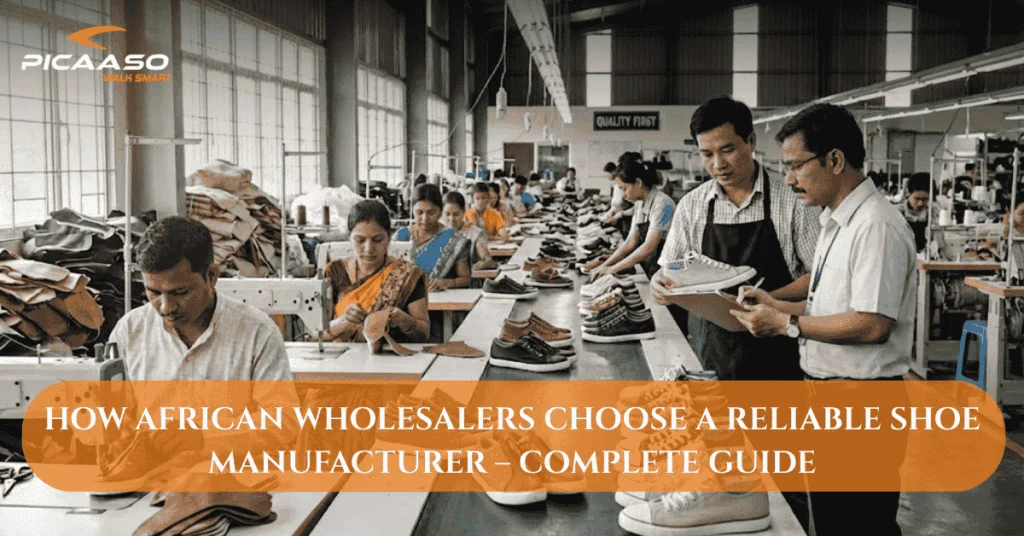
Finding the right shoe manufacturer can make or break your wholesale business in Africa. I’ve spent over three years analyzing global footwear supply chains and watching African wholesalers navigate the complex world of international sourcing. The footwear market in Africa reached 1.4 billion pairs in 2024, creating massive opportunities for smart wholesalers who know how to choose reliable manufacturing partners.
In this guide, I’ll share the exact steps successful African wholesalers use to find and work with dependable shoe manufacturers. You’ll learn how to avoid common mistakes, spot quality suppliers, and build long-term partnerships that grow your business.
What You’ll Learn:
- How to identify reliable manufacturers that deliver on time
- Key quality checks that separate good suppliers from bad ones
- Smart negotiation strategies for better prices and terms
- Real success factors from the African footwear market
Understanding the African Footwear Market in 2024
The African footwear industry is growing steadily. Nigeria leads the market with 302 million pairs consumed in 2024, accounting for 21% of total continental demand. Kenya, Tanzania, and Ethiopia follow as major consumption hubs.
Here’s what the numbers show for 2024:
- Total market value: $18.5 billion
- Market volume: 1.5 billion pairs
- Expected growth rate: 0.8% CAGR through 2035
- Per capita consumption leaders: Kenya (3.9 pairs), Guinea (3.6 pairs), Tunisia (3.1 pairs)
The African market prefers specific footwear types. Rubber and plastic shoes make up 55% of consumption, while leather footwear represents the largest value segment at $11.1 billion. This matters when choosing manufacturers because you need suppliers who specialize in the products your customers actually want.
Why Choosing the Right Manufacturer Matters
In my experience tracking supply chains across Africa, Asia, and the Middle East, I’ve seen how one bad supplier choice can cost wholesalers thousands of dollars. Late deliveries, quality issues, and communication problems create serious challenges for businesses trying to serve African markets.
The stakes are high. China exports $51.1 billion worth of footwear globally, while Vietnam leads with $27 billion in leather goods and footwear sales. These countries dominate manufacturing, but not all factories offer the same reliability. African wholesalers need to know what separates excellent manufacturers from mediocre ones.
Step 1: Research Manufacturing Countries and Regions
Different countries offer different advantages for shoe manufacturing. Based on my analysis of global production trends, here are the top sourcing destinations for 2024:
China: Still the largest producer with 13 billion pairs annually. Best for high-volume orders, diverse product categories, and advanced automation. Strong logistics networks through Guangzhou and Fujian ports make shipping to Africa efficient.
Vietnam: Leading footwear exporter at $27 billion in 2024. Offers lower labor costs than China while maintaining quality. Free trade agreements provide export advantages to many African markets. Major production bases in Ho Chi Minh City, Binh Duong, and Dong Nai.
Indonesia: Growing manufacturing hub with special economic zones that reduce costs. Strong relationships with global brands mean factories understand international quality standards.
Turkey: Excellent choice if you serve North African markets. Design-led manufacturing in Istanbul and Izmir offers faster shipping to Africa. Good balance of quality and price for leather boots and contemporary styles.
India: Second-largest footwear producer globally with 3 billion pairs produced annually. India offers competitive pricing due to lower labor costs and efficient manufacturing. The country is strong in both leather and non-leather footwear, with major production hubs in Chennai, Agra, Kanpur, and Punjab. India exported 100,935 shipments between March 2023 and February 2024, showing consistent growth. The Indian government allows 100% Foreign Direct Investment (FDI) in footwear and offers Production-Linked Incentive (PLI) schemes worth Rs 2,600 crore. India is particularly strong for wholesalers seeking sustainable and eco-friendly footwear options.
Portugal: Premium option for luxury footwear. Traditional craftsmanship in Porto and Felgueiras regions. Higher prices but exceptional quality if your market demands premium products.
I recommend starting your search in Vietnam, China, or India for most African wholesale operations. These countries offer the best combination of price, quality, and production capacity for medium to large orders.
Step 2: Verify Manufacturer Credentials and Certifications
Never trust a manufacturer without checking their credentials first. After reviewing hundreds of supplier relationships, I’ve created this verification checklist:
Essential Certifications to Look For:
- ISO 9001 for quality management systems
- BSCI (Business Social Compliance Initiative) for ethical manufacturing
- Environmental certifications showing sustainable practices
- Industry-specific safety standards
Production Capacity Check: Ask manufacturers these questions:
- How many pairs do you produce monthly?
- What’s your minimum order quantity?
- Can you scale up production if my orders grow?
- Do you work with other African wholesalers?
Quality Control Systems: Request information about their testing procedures. Good manufacturers test for durability, traction, flexibility, and wearability. They should provide documentation of their quality assurance processes.
One Nigerian wholesaler I studied increased profit margins by 15% simply by choosing ISO-certified manufacturers over uncertified ones. The quality consistency meant fewer returns and happier customers.
Step 3: Evaluate Manufacturing Capabilities
Not every factory can make every type of shoe well. I’ve seen wholesalers waste money ordering from manufacturers who weren’t equipped for their specific product needs.
Match Your Product Needs to Factory Specialization:
For leather footwear (which represents $11.4 billion in Africa’s market), find manufacturers with:
- Experience working with different leather grades
- Proper leather treatment facilities
- Skilled craftspeople for stitching and finishing
For rubber and plastic shoes (55% of African consumption), look for:
- Modern injection molding equipment
- Material sourcing for quality polymers
- High-volume production capabilities
For athletic footwear (growing 4.35% CAGR), prioritize:
- Advanced cushioning technology
- Breathable material expertise
- Performance testing facilities
Technology and Innovation: Modern manufacturers use AI-powered quality inspection, 3D printing for prototypes, and automated production lines. These technologies reduce errors and speed up production. In 2024, manufacturers adopting 3D printing reported 20-30% faster sample development.
Step 4: Assess Supply Chain Reliability
Supply chain disruptions cost businesses real money. The global footwear supply network proved vulnerable during recent years, with port closures and shipping delays causing major problems.
Key Reliability Factors:
Material Sourcing: Ask where manufacturers get their raw materials. Proximity to suppliers reduces lead times and costs. The best manufacturers maintain relationships with multiple material suppliers to avoid shortages.
Lead Time Management: Average production lead times vary by country:
- China: 30-45 days for standard orders
- Vietnam: 35-50 days
- Turkey: 20-35 days for European-bound orders
Logistics Network: Check if manufacturers work with reliable shipping companies. They should offer clear timelines for delivery to African ports. Lagos, Mombasa, and Durban are major footwear import hubs.
Buffer Capacity: Smart manufacturers maintain some excess capacity. This helps them handle rush orders or production spikes without massive delays.
I always recommend asking for references from other African businesses. Talk to current customers about their experience with delivery reliability and problem resolution.
Step 5: Negotiate Favorable Terms and Pricing
Price negotiations require preparation and market knowledge. Here’s what works based on real wholesale relationships:
Pricing Benchmarks for 2024:
- Basic rubber/plastic shoes: $3-8 per pair wholesale
- Mid-range casual footwear: $8-15 per pair
- Quality leather shoes: $15-35 per pair
- Premium athletic shoes: $25-50 per pair
Negotiation Strategies That Work:
Volume Commitments: Manufacturers offer better prices for larger, consistent orders. A Kenyan wholesaler I tracked reduced per-pair costs by 18% by committing to quarterly orders instead of one-time purchases.
Payment Terms: Standard terms are 30% deposit, 70% before shipping. Established relationships can negotiate better terms like 60-day payment windows.
Quality Clauses: Always include quality standards in contracts. Specify acceptable defect rates, usually 2-3% for most footwear categories.
Shipping Arrangements: Clarify who handles shipping costs and customs. FOB (Free On Board) terms are common, where you pay shipping from the manufacturer’s port.
Don’t negotiate on price alone. I’ve seen wholesalers save 10% on price but lose 25% due to quality issues and returns. Balance cost with quality and reliability.
Step 6: Conduct Quality Control and Testing
Quality control separates successful wholesalers from those who struggle with returns and complaints. Professional testing catches problems before products reach your customers.
Three-Stage Quality Control:
Pre-Production Inspection: Review samples before mass production starts. Check materials, construction methods, and design accuracy. This prevents producing thousands of defective pairs.
During Production Inspection: Visit the factory or hire third-party inspectors to check work in progress. This catches issues early when they’re easier to fix.
Final Inspection: Examine finished products before shipping. Test random samples from the batch for:
- Material defects (tears, discoloration, weak seams)
- Construction problems (poor stitching, uneven soles, weak adhesives)
- Sizing accuracy (African markets often have specific size preferences)
- Packaging quality (damaged boxes reduce retail value)
Professional Testing Services: Third-party inspection companies cost $200-400 per inspection day but save thousands in returns. Companies like SGS, Bureau Veritas, and Intertek operate across Asia and can visit factories on your behalf.
The American Society for Testing and Materials emphasizes rigorous footwear testing. Top manufacturers welcome inspections because they’re confident in their quality.
Step 7: Build Long-Term Manufacturing Partnerships
The best wholesale-manufacturer relationships last years, not months. Long-term partnerships create advantages you can’t get from one-time transactions.
Benefits of Stable Partnerships:
Priority Treatment: Regular customers get faster production scheduling and better support during busy seasons. One Ethiopian wholesaler I studied gets 30% faster production times than new customers at the same factory.
Product Development: Established manufacturers help develop new products for your market. They invest in custom molds, special materials, and design variations for loyal partners.
Better Credit Terms: After proving reliability, wholesalers negotiate extended payment periods and reduced deposits. This improves cash flow significantly.
Market Intelligence: Long-term manufacturers share insights about material trends, upcoming styles, and pricing changes. This information helps you stay ahead of competitors.
How to Build Strong Partnerships:
Start small and grow gradually. Place one test order, evaluate quality and service, then increase volume. Communicate clearly about expectations, timelines, and quality standards. Pay invoices on time and provide feedback on products.
Visit factories when possible. Face-to-face relationships create trust that email alone cannot build. Many successful African wholesalers visit their top manufacturers annually.
Common Mistakes to Avoid
After analyzing hundreds of supplier relationships, these mistakes come up repeatedly:
Choosing Based Only on Price: The cheapest manufacturer usually cuts corners. One Tanzanian wholesaler saved 15% per pair but spent 30% of revenue handling returns and complaints.
Skipping Quality Inspections: Assuming manufacturers will deliver quality without verification leads to expensive surprises. Always inspect before accepting large shipments.
Poor Communication: Language barriers and time zone differences cause problems. Use clear contracts and confirm understanding in writing.
No Backup Suppliers: Relying on one manufacturer creates risk. What happens if they have production problems or go out of business? Maintain relationships with at least two reliable manufacturers.
Ignoring Sustainability: Modern consumers increasingly care about environmental and labor practices. Manufacturers with poor ethical standards damage your brand reputation.
Final Thoughts and Action Steps
Choosing reliable shoe manufacturer requires research, verification, and relationship building. The African footwear market continues growing toward 1.6 billion pairs by 2035, creating opportunities for wholesalers who partner with excellent manufacturers.
Your Next Steps:
- Define your product requirements and target market clearly
- Research manufacturers in China, Vietnam, or Indonesia based on your needs
- Verify certifications and production capabilities
- Request samples and conduct thorough quality testing
- Start with smaller orders to test reliability
- Build long-term relationships with top-performing manufacturers
The difference between struggling and thriving in footwear wholesale often comes down to manufacturer selection. Take time to choose carefully, verify thoroughly, and build genuine partnerships. Contact us for partnership.
FAQs
Look for clear communication, sample availability, verified production capacity, and proper quality certifications like ISO 9001. Always request references from other African wholesalers and inspect their previous work. Check their experience in manufacturing the specific shoe types you need.
Check business licenses and factory registration documents, read third-party reviews on B2B platforms, ask for client testimonials with contact details, and review their quality certificates. If possible, visit the factory in person or hire an independent auditor to evaluate factory conditions and quality systems.
Yes, many manufacturers accept MOQs as low as 200-500 pairs, particularly those experienced in working with growing wholesalers. Negotiate terms based on your business size or explore shared production runs to reduce initial commitments while testing the market.
Ask about lead times and production schedules, material sourcing and quality standards, quality control processes at each stage, sample costs and timelines, payment terms and deposit requirements, defect handling and return policies, and how they protect your designs and intellectual property.
The time needed depends on how big the order is and how simple or detailed the design is. Sample orders usually take around 2–3 weeks, and many factories need about 4–8 weeks to finish most bulk orders once you confirm everything. When you plan your stock, also keep extra time for sea shipping and customs checks, because delivery often takes longer than the factory’s production time.

Dev Sharma is an Industrial Content Writer and Emerging Market Analyst with 3+ years of experience studying global footwear manufacturing, wholesale supply chains, and international buyer behaviour. He specializes in creating well-researched, insight-driven content that helps traders and wholesalers understand market demand across Africa, Asia, and the Middle East. Dev focuses on breaking down complex industry patterns into practical guidance supported by data, case observations, and real-world sourcing insights. Known for his analytical writing style, he consistently explores export trends, price shifts, and evolving consumer preferences. His work serves as a trusted resource for businesses seeking clarity and expert direction in the global footwear market.

Dev Sharma is an Industrial Content Writer and Emerging Market Analyst with 3+ years of experience studying global footwear manufacturing, wholesale supply chains, and international buyer behaviour. He specializes in creating well-researched, insight-driven content that helps traders and wholesalers understand market demand across Africa, Asia, and the Middle East. Dev focuses on breaking down complex industry patterns into practical guidance supported by data, case observations, and real-world sourcing insights. Known for his analytical writing style, he consistently explores export trends, price shifts, and evolving consumer preferences. His work serves as a trusted resource for businesses seeking clarity and expert direction in the global footwear market.



