
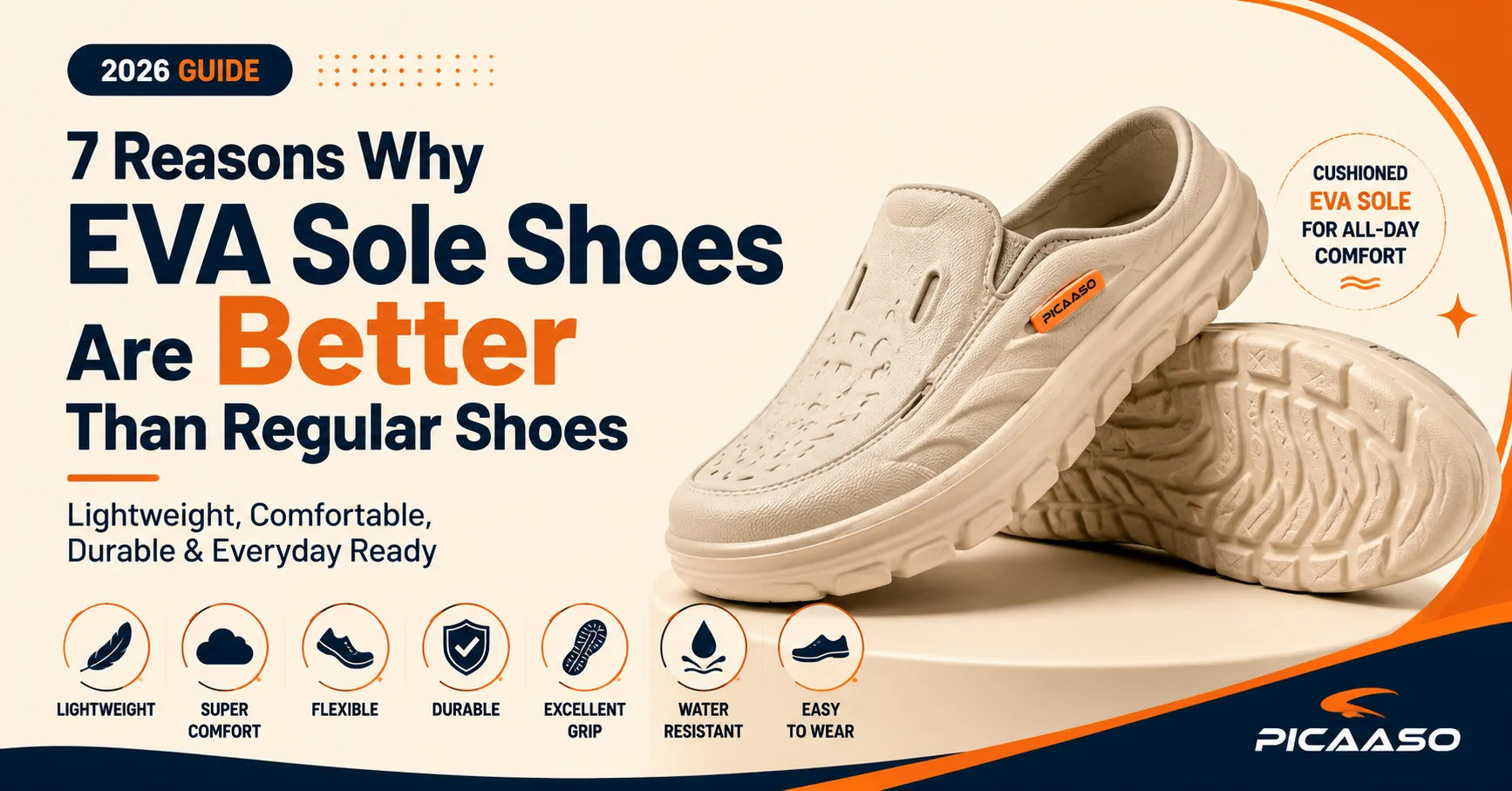
Choosing comfortable footwear isn’t just about style. The sole of your shoe plays a major role in how your feet feel throughout the day. Whether you’re walking to work, traveling, shopping, or standing for long hours, the right sole can make every step more comfortable.
Many people are now choosing EVA sole shoes over regular footwear because they are lightweight, flexible, and designed for everyday comfort. But are they really better?
The answer depends on how you use your shoes. In this guide, we’ll compare EVA sole shoes with regular shoes in practical terms so you can decide which option fits your lifestyle.
Quick Answer
Yes, EVA sole shoes are generally better than regular shoes for daily wear because they are lighter, softer, and absorb impact more effectively. They help reduce foot fatigue, offer better cushioning, and are comfortable for walking, travel, and everyday activities. However, heavy-duty work or specialized environments may require other types of footwear.
Why Does the Sole of a Shoe Matter?
Most people pay attention to the color, design, or brand when buying shoes. The sole often gets overlooked.
However, the sole is responsible for supporting your feet, absorbing impact, and providing comfort while you walk. A well-designed sole can reduce pressure on your feet and make long hours of walking feel easier.
That’s why choosing the right type of sole is just as important as choosing the right shoe.
Top 7 Reasons Why EVA Sole Shoes Are Better
1. They Feel Lighter on Your Feet
One of the biggest reasons people prefer EVA sole shoes is their lightweight feel.
Heavy shoes can make your feet tired, especially if you’re walking throughout the day. A lighter shoe allows your feet to move naturally and comfortably without adding unnecessary weight.
Whether you’re commuting, running errands, or traveling, lightweight footwear can make a noticeable difference.
2. They Provide Better Everyday Comfort
Comfort is one of the first things you’ll notice when wearing quality EVA sole shoes.
The material offers soft cushioning under your feet, helping reduce the pressure that builds up during daily activities. This makes them a practical choice for people who spend several hours on their feet.
Instead of feeling stiff, the sole provides a more comfortable walking experience from morning to evening.
3. They Help Reduce Foot Fatigue
Walking or standing for long periods can leave your feet feeling sore.
Because EVA soles absorb more everyday impact, they help reduce stress on your feet during regular movement. Many people choose this type of footwear for work, travel, shopping, or college because it stays comfortable throughout the day.
While no shoe can completely eliminate fatigue, good cushioning can make daily movement easier.
4. They Move Naturally With Your Feet
Comfort isn’t only about softness.
A flexible sole allows your foot to bend naturally while walking. This creates smoother movement and helps improve overall comfort during everyday use.
Whether you’re climbing stairs, walking indoors, or spending time outdoors, flexible footwear often feels easier to wear than shoes with very stiff soles.
5. They Are Easy to Maintain
Daily footwear should be simple to care for.
Many EVA sole shoes are easy to clean with a damp cloth and usually dry faster than footwear made with heavier materials. This makes them convenient for regular use, especially during changing weather conditions.
Simple maintenance also helps keep your shoes looking fresh for longer.
6. They Come in Different Styles
Another advantage is versatility.
Today, EVA soles are used in many types of footwear, including:
- Walking shoes
- Casual shoes
- Slides
- Sandals
- Slippers
- Clogs
This means you don’t have to choose between comfort and style. You can find footwear designed for different occasions while still enjoying the benefits of a lightweight sole.
7. They Offer Great Value for Daily Wear
When buying footwear, comfort and durability matter just as much as price.
A well-made pair of EVA sole shoes offers a good balance of comfort, flexibility, and everyday performance. For many people, this makes them a practical choice for daily use without compromising on quality.
Choosing footwear that supports your daily routine is often a better investment than focusing only on appearance.
EVA Sole Shoes vs Regular Shoes
Feature | EVA Sole Shoes | Regular Shoes |
Weight | Lightweight | Usually heavier |
Everyday Comfort | Excellent | Varies by material |
Cushioning | Soft and comfortable | Depends on the sole |
Flexibility | High | Moderate |
Walking Experience | Smooth | May feel stiffer |
Daily Maintenance | Easy | Depends on the material |
Best For | Walking, travel, casual wear | Specialized or heavy-duty use |
Who Should Choose EVA Sole Shoes?
These shoes are a good option for people who value everyday comfort.
They are especially suitable for:
- Office professionals
- Students
- Teachers
- Retail staff
- Healthcare workers
- Travelers
- Homemakers
- Anyone who walks regularly
If your day involves moving around for several hours, comfortable footwear can make a noticeable difference.
When Regular Shoes May Be a Better Choice
Although EVA sole shoes work well for daily use, they aren’t the best choice for every situation.
Regular shoes designed for specific purposes may be more suitable if you:
- Work in construction or industrial environments
- Need certified safety footwear
- Participate in demanding outdoor activities
- Require specialized sports shoes for a particular game
The best footwear always depends on where and how you plan to use it.
What to Check Before Buying EVA Sole Shoes
Before making a purchase, keep these simple points in mind:
- Choose the correct shoe size.
- Check whether the sole feels comfortable while walking.
- Look for good grip on different surfaces.
- Pick breathable upper materials for better airflow.
- Buy from a trusted footwear manufacturer that focuses on quality.
Taking a few extra minutes to evaluate these features can help you choose footwear you’ll enjoy wearing every day.
Why Many Buyers Choose Picaaso Footwear
At Picaaso Footwear, we understand that everyday footwear should be comfortable, reliable, and made to last. That’s why we focus on designing footwear with quality materials that support daily movement without compromising on style.
Whether you’re looking for comfortable slippers, sandals, or everyday footwear for bulk orders, choosing the right sole remains one of the most important factors for long-term comfort.
Final Thoughts
The right footwear can improve your everyday comfort more than you might expect.
For most people, EVA sole shoes are a practical choice because they are lightweight, flexible, and comfortable enough for regular walking and daily activities. While regular shoes still have their place for specialized work or sports, EVA soles continue to be a preferred option for people looking for all-day comfort.
Before buying your next pair, think about how you use your shoes every day. Choosing footwear that matches your lifestyle will always give you the best experience.
Frequently Asked Questions
What is the advantage of EVA soles?
EVA soles are lightweight, soft, and comfortable. They provide good cushioning, absorb shock, and help reduce foot fatigue during daily walking and standing.
What are the disadvantages of EVA material?
EVA is softer than some other sole materials, so it may wear out faster with heavy daily use. It is also not the best choice for industrial or heavy-duty work.
Which is better: EVA sole or synthetic sole?
It depends on your needs. EVA soles are better for comfort, flexibility, and lightweight everyday wear, while synthetic soles may offer better durability for certain activities.
Is EVA good for feet?
Yes. EVA is good for feet because it provides cushioning, supports natural movement, and helps reduce pressure during walking and daily activities.
Which is better, rubber or EVA?
Both have their benefits. EVA is better for lightweight comfort and shock absorption, while rubber is more durable and offers better grip on rough or slippery surfaces.
Is EVA 100% waterproof?
EVA material is water-resistant and does not absorb much water, making it suitable for wet conditions. However, a shoe is not 100% waterproof unless its upper material is also designed to keep water out.

Picaaso Footwear Team is an Indian footwear manufacturer and B2B footwear supplier serving wholesalers, distributors, retailers, exporters, and bulk buyers. With expertise in footwear manufacturing, OEM solutions, private labeling, and bulk supply, Picaaso Footwear shares practical insights on footwear sourcing, manufacturing, materials, market trends, and business requirements. Through industry-focused content and real-world footwear knowledge, Picaaso helps businesses make informed sourcing decisions and build reliable footwear supply partnerships across India and international markets.



