
According to Statista (2024), the footwear market is projected to expand to $543.9 billion globally by 2030, with Africa being one of the fastest growing wholesale markets. This rapid growth will offer opportunities for wholesalers and retailers—if they have a reputable shoe supplier who provides consistent quality, on time delivery and designs they can sell.
If you have had any periods of shipment delays, poor product quality, sent emails to suppliers without having responses, or have other situations where suppliers have disappeared with the first sale, you know the cost of these problems. Selecting the wrong shoe supplier can be a financial loss, plus it will hurt your brands reputation and trust of your customers.
In this blog we will explore:
- What defines a trusted supplier for your shoes
- Important factors that every wholesaler should consider before signing a lease
- How wholesalers can master their global strategy through unique suppliers
- Actionable tips to future-proof your sourcing strategy
By the end, you’ll know exactly how to avoid supplier risks and build a long-term, profitable partnership.
Table of Contents
How to Identify a Trusted Shoe Supplier
A trusted shoe supplier isn’t just about delivering shoes—it’s about being a growth partner for your business. Here are the essential qualities to look for:
1. Consistent Product Quality
- The shoes must provide a good quality of appearance and functionality.
- If the supplier uses poor stitching, lower quality material and inconsistent design, you may find their shoes positioned to be returned and your reputation less credible.
- Example: A retailer in Nairobi one suggested that they lost 40% of their reorders with suppliers who used synthetic instead of full leather.
2. Reliable Delivery and Logistics
- In wholesale markets like Kinshasa, Lagos, and Addis Ababa, timing is critical. Missing a delivery window can cause a sales season loss.
- A trusted supplier has built some trusted shipping partners, and provides live shipping updates, including tracking.
3. Communication and Transparency
- Hidden fees, ambiguous invoices, or sluggish responses are bad signs.
- A good supply has open-book transparency, so the buyer knows what they are paying for.
4. Adaptation to Market Needs
- African markets seek uniquely different styled products, i.e. durable slippers in Somalia, leather sandals from Ethiopia, and orthopedic shoes from Nigeria.
- The trusted suppliers research these trends and respond production accordingly.
Important Aspects to Consider When Selecting a Shoe Supplier
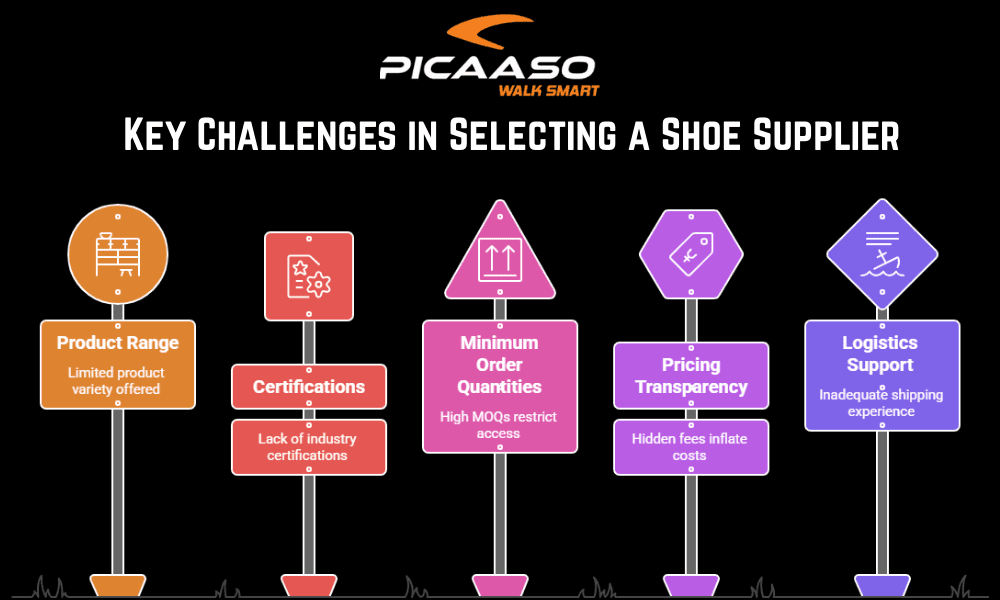
When selecting a reliable shoe supplier, consider them against the following important factors:
1. Range of Products & Availability of Custom Designs
- Can they offer slippers, sandals, wedges, leather shoes and/or orthopedic shoes?
- Are they capable of offering custom branding, packaging and/or sizing for the various regions?
2. Certifications & Compliance
- Look for ISO-certified factories and compliance with global labor standards.
- As noted by the ILO (2023), businesses that work with certified suppliers can expect to reduce compliance risks by 45%.
3. Minimum Order Quantities (MOQs)
- A few suppliers set high MOQs to prevent smaller wholesalers from entering the wholesale market.
- A trusted supplier will provide flexible MOQs for different businesses.
4. Pricing Transparency
- Be aware of suppliers who apply extra charges (packaging, customs, storage) opaque.
- A trusted supplier will disclose one price quote to accommodate hidden charges.
5. Logistics and Delivery Support
Check if they have experience in African shipping corridors like:
- Berbera Port (Somaliland)
- Mombasa Port (Kenya)
- Apapa Port (Nigeria)
6. After-Sales Support
- Do they handle damaged product claims?
- Will they offer post-shipment consultation services?
Suggestions for Creating Relationships with Suppliers in the Long-Term
1. Start with Pilot Orders
Don’t jump into massive bulk orders. Test the supplier’s consistency with a smaller shipment first.
2. Utilize Contracts and Service Level Agreements (SLA)
Develop explicit service level agreements that outline delivery timelines, specifications, and penalties for delays.
3. Put Resources Into Communication
Establish weekly calls or WhatsApp updates to circumvent miscommunications.
4. Utilize Technology
Use tools like:
- Zoho Inventory for order tracking
- ShipBob or DHL portals for shipment visibility
5. Build Trust Through Transparency
Suppliers are more committed to clients who are clear, professional, and reliable in payments.
Conclusion:
Selecting the correct supplier is not just buying shoes at the correct price. It’s about building a sustainable growth ecosystem for your business. The wholesale shoe industry is already competitive, and your supplier is more than just a vendor – they are your strategic partner to give you a fighting chance of success.
A shoe supplier you can trust gives you more than just a product:
- Reliably stable product quality, which strengthens the reputation of your brand and customer loyalty.
- Delivery on time for all major ports in Africa, giving you the opportunity to take advantage of seasonal demand without late fees from the ports or providers.
- Styles that are reflective of the market to match your regional needs.
- Profitability over the long term with transparency in pricing, mitigated disruption, and repeat transactions from your customers.
If you are really intent on building your wholesale business, it is time to align with a supplier that shares the vision you have. Whether you are a wholesaler in Lagos, a distributor in Kinshasa, or a retailer in Nairobi, the right shoe supplier is the one that is going to help you dominate your market and be able to grow with confidence.


